


Views: 0 Author: Site Editor Publish Time: 2025-11-19 Origin: Site


Businesses are constantly looking for ways to reduce operational costs without compromising building functionality or comfort. One often overlooked factor is the type and condition of your commercial door. Doors are a critical component of a building's envelope, influencing heat retention, air leakage, and energy consumption. Frequent openings, insufficient insulation, or poor sealing can significantly increase HVAC loads, leading to higher energy bills. Hele Doors, with over a decade of expertise in door manufacturing and a broad range of products designed for commercial, industrial, and institutional applications, offers solutions that directly address these energy challenges. This article explores how upgrading your commercial doors can help lower energy costs and improve overall efficiency.
The energy performance of a building is closely tied to the efficiency of its doors. Unlike walls or windows, doors are constantly in use, which makes them a major factor in heat loss or gain. While walls are mostly static barriers, doors are dynamic—they open, close, and interact with the interior and exterior environment multiple times a day.
Air leakage is a primary contributor to energy loss in buildings. Gaps around door edges, poorly fitted frames, or worn-out weatherstripping allow conditioned air to escape and outdoor air to enter. Thermal bridging occurs when heat transfers through less-insulated materials, such as metal door frames, which can compromise the overall thermal performance of a door. R-value measures a material's resistance to heat flow—the higher the R-value, the better the door’s insulation. Commercial doors with higher R-values significantly reduce the load on heating and cooling systems, leading to noticeable energy savings.
High-traffic areas like loading docks, retail entrances, and hospital corridors are particularly susceptible to energy loss due to frequent door operation. Every time a door opens, a surge of outdoor air enters the building, forcing HVAC systems to compensate. Over the course of a day, repeated openings can account for a large portion of a facility’s energy consumption. Installing doors designed to minimize air infiltration and reduce open-time exposure can dramatically lower energy usage while maintaining accessibility.
Selecting the right type of door is crucial for energy efficiency. Several commercial door designs and features can help businesses reduce energy waste and enhance building performance.
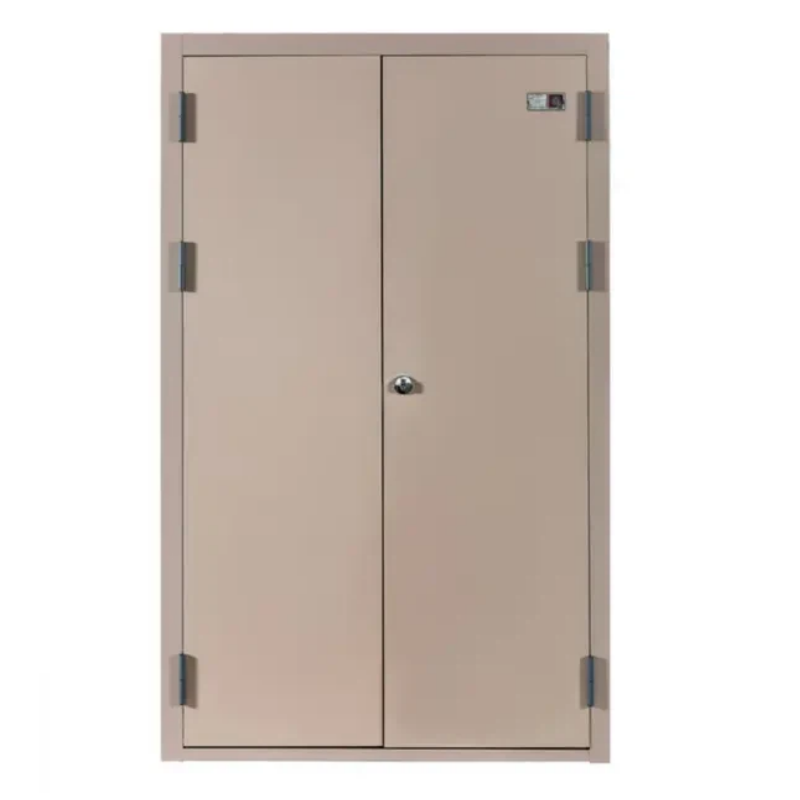
Insulated steel doors are widely used for commercial applications due to their strength, durability, and energy-saving potential. They feature cores made of polystyrene or polyurethane, each offering different insulation benefits. Polystyrene cores provide moderate thermal resistance at a lower cost, while polyurethane cores offer higher R-values and superior energy performance. Hele Doors offers steel doors with multiple core options to suit diverse commercial requirements, delivering both durability and energy efficiency.
Aluminum doors and storefronts can be energy-efficient if they include thermal breaks—plastic or composite sections that interrupt heat flow through the metal frame. Combined with double or triple glazed panels, thermally broken aluminum doors prevent heat transfer, maintain indoor comfort, and reduce HVAC loads. These doors are particularly suitable for commercial lobbies, offices, and retail environments where aesthetics and energy performance must go hand in hand.
For areas with heavy traffic, high-speed fabric and roll-up doors minimize energy loss by reducing the amount of time the doorway is open. These doors operate at speeds much faster than traditional swing doors, effectively creating a temporary barrier against outdoor air. They are ideal for loading docks, warehouses, and cold storage facilities where maintaining temperature control is critical.
Even the most efficient door can lose energy if accessories and installation are subpar. Investing in high-quality seals, thresholds, and door closers can improve energy performance without replacing the entire door.
Intumescent seals expand under heat to fill gaps around the door, providing both fire protection and enhanced insulation. Weatherstripping helps seal edges and prevents air leakage. Regular maintenance of these accessories ensures that doors continue to perform efficiently over their lifespan. Hele Doors supplies doors pre-fitted with industry-leading seals and weatherstripping to maximize energy savings from the outset.
Automatic door closers reduce energy loss by ensuring doors are never left open unintentionally. Coupled with activation controls, such as motion sensors or access panels, doors close promptly after use, minimizing exposure to outdoor air. These technologies are particularly beneficial for busy commercial environments, where human error could otherwise lead to significant energy waste.
Integrating doors into broader building operations can further enhance energy efficiency. Smart controls and operational adjustments can transform simple door upgrades into comprehensive energy-saving strategies.
Motion sensors and timed access systems allow doors to operate only when needed, reducing unnecessary openings. Vestibules and air curtains create buffer zones, preventing conditioned air from escaping during door use. Air curtains in particular are effective in commercial entrances, maintaining indoor climate without hindering foot traffic. These solutions are compatible with Hele Doors’ commercial offerings and can be tailored to each building’s traffic patterns.
Modern building management systems (BMS) can integrate door operation, HVAC, and lighting controls, optimizing energy consumption across the facility. By linking commercial door activity with climate control, buildings respond dynamically to real-time conditions, ensuring energy is used only when necessary. Hele Doors supports seamless integration with BMS, providing a future-proof solution for energy-conscious facilities.
Not every door upgrade requires a full replacement. Businesses can achieve energy savings through selective retrofits or by recognizing when replacement is justified.
Simple interventions, such as adding seals, installing automatic closers, or adjusting door alignment, can significantly reduce energy losses without major capital investment. These retrofits are ideal for businesses seeking immediate energy savings and improved comfort.
Replacement becomes necessary when doors are structurally compromised, severely under-insulated, or incompatible with modern HVAC strategies. Upgrading to energy-efficient commercial doors, such as insulated steel, thermally broken aluminum, or high-speed roll-up designs, provides long-term savings and operational benefits. Hele Doors’ product portfolio offers comprehensive options to meet these demands, ensuring that businesses can invest in doors that deliver measurable energy reductions.
Energy-efficient doors are not only cost-saving—they support environmental goals and regulatory compliance.
Many regions offer incentives for businesses that upgrade to energy-efficient building components. Doors that meet or exceed local energy codes can qualify for rebates or tax benefits, making upgrades financially attractive in addition to environmentally responsible.
Businesses increasingly prioritize sustainability in operations and public messaging. Using high-performance commercial doors with superior insulation and durability supports ESG initiatives, reducing carbon footprint while promoting corporate responsibility. Hele Doors’ commercial doors are designed to align with these goals, providing a tangible element of sustainability to building projects.
Upgrading your commercial door is a practical, effective step toward reducing energy bills, improving indoor comfort, and supporting sustainability initiatives. Hele Doors, with its extensive range of energy-efficient commercial doors and accessories, offers solutions that address both frequent-use and high-performance scenarios. Whether through retrofits or full replacements, investing in doors that minimize air leakage, enhance insulation, and integrate with smart building systems delivers long-term value. To learn more about energy-saving door options and schedule a professional assessment, contact us today.
1. How does a commercial door affect my building's energy consumption?
Doors are frequently opened and closed, allowing heat to escape and outside air to enter. Insulated doors with proper seals reduce this energy loss.
2. What types of commercial doors are most energy-efficient?
Insulated steel doors, thermally broken aluminum doors, and high-speed fabric or roll-up doors are top choices for reducing energy costs.
3. Can I improve energy efficiency without replacing the door?
Yes. Adding weatherstripping, upgrading seals, and installing automatic closers can substantially reduce energy loss in existing doors.
4. Are there incentives for upgrading to energy-efficient commercial doors?
Many local energy codes and programs provide rebates or tax incentives for businesses installing energy-efficient doors, making upgrades financially attractive.


